
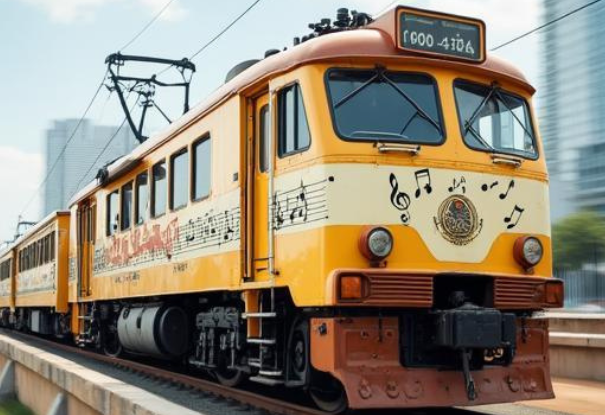
The Groove: The Tracks that the Music Train Runs On
Although I’ve attended some highly regarded music schools and studied with some jazz heavyweights, I learned something on the streets of Chicago that required no conservatory, no professors, or no formal study. Around the spring of 1984, walking up and down State Street (that Great Street) I began to hear some resounding drum grooves. However, I could hear these were not traditional drums, they had a unique, peculiar tone. As I followed my ears, I found a crowd of people gathered around in a semicircle, watching something intently. I moved into view and was quite surprised, and a bit amused, when I was able to see the spectacle – two teenagers playing drums beats on empty paint buckets! They used real drumsticks and additional buckets as stools — drum thrones as they are called in the business.
In the crowd of people enjoying the sounds, some people were throwing money into, you guessed it, an empty paint bucket! Some others were dancing (there are always those dancers in every crowd, you know who you are!). So here I was witnessing something crucial, something I would take with me the rest of my life: The groove is everything. While I was studying theory, arranging, music analysis, melodic contour, instrument ranges, improvisation and time signatures – all of which are core parts of the musical experience — these kids were simply laying down killer grooves on inexpensive objects, moving people and making big cash to boot!
While I didn’t quit my studies, buy some paint, and pull up a spot on State and Madison, I did start to think on what I had learned. I came to know that, in music, if you start with a groove that connects with people in a visceral way, everything else is just icing on the cake. You can play simple melodies on top of the groove or complex ones. You can have lush arrangements or sparse ones. You can have a big band or play solo. You can have vocals or not. You can have acoustic instruments or electric. The stronger the groove is, the less anything else matters. Conversely, you can have the best, most progressive arrangements or complex harmonies, but without a groove, you will not be able to gather and move a crowd like the paint-bucket drummers did.
To use a transportation analogy: the groove is the track. The train is everything else —harmony, melody, arrangements, lyrics, style, genre, dynamics, timbre, and instrumentation. You can have the fanciest, most elaborate and beautiful train car in the world, but if you have no tracks, you are stuck at the station with nowhere to go. Yet, if you have solid, well-designed, well-constructed tracks to ride on, you can travel great distances in comfort and style. Groove is the tracks the music train runs on. Good and groovy travels to you!